 Andy Biotech
1 / 1
| Red Yeast Rice Extract — Technical Data Sheet | |
| Sense Index | |
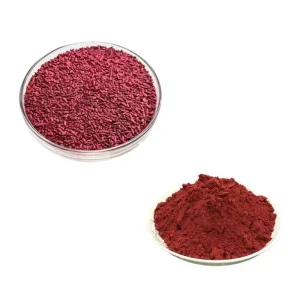
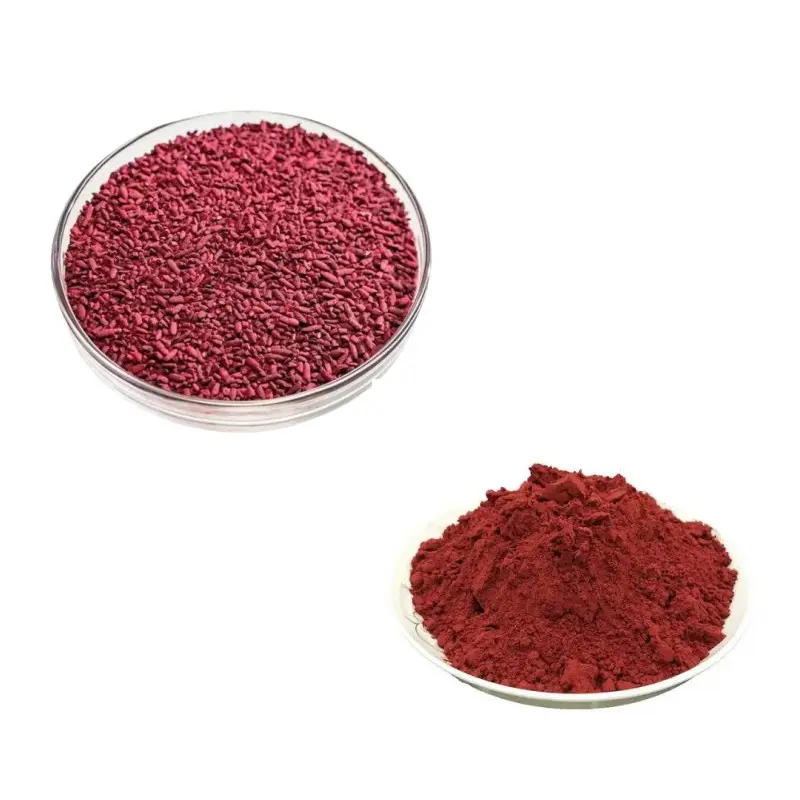
| Appearance | Red to dark red powder |
| Odor & Taste | Characteristic |
| Physical-chemical Index | |
| Particle Size | 100 mesh |
| Monacolin K (on Dry basis) | 0.02% – 5% |
| Moisture | 10.0% Max |
| Lead | 1 ppm Max |
| Arsenic | 1.0 ppm Max |
| Mercury | 0.5 ppm Max |
| Cadmium | 0.1 ppm Max |
| Hygienic Index | |
| Total Plate Count | 5,000 cfu/g Max |
| Mold & Yeast | 100 cfu/g Max |
| Enterobacteriae | 10 cfu/g Max |
| E. Coli | 3 cfu/g Max |
| Salmonella | Absent |
| Function: Health care products, food color, pharmaceutical raw materials | |
| Packaging: 1kg/aluminium foil bag, 25kg/craft bag | |
| Shelf Life: 24 months stored in original packaging away from the light, and under the optimal temperature 10~25℃. | |
Red yeast rice extract is a natural functional component obtained from red yeast rice through modern biotechnology. Red yeast rice is produced by fermenting indica rice with the fungus Monascus purpureus and has a thousand-year history of consumption in China. The extract is rich in monacolins (particularly monacolin K), red yeast pigments, unsaturated fatty acids, and various enzymes, exhibiting an orange-red to deep red color. Traditionally, red yeast rice was used for food coloring and preservation. Modern techniques employ controlled fermentation and efficient extraction to standardize its active ingredients, making it a significant raw material for natural health products.
The core efficacy of red yeast rice extract lies in assisting blood lipid regulation. Its contained monacolin K inhibits a key enzyme in cholesterol synthesis, helping to reduce total cholesterol and low-density lipoprotein cholesterol. Additionally, the natural antioxidants in the extract help protect vascular endothelium and reduce oxidative damage, offering comprehensive benefits for cardiovascular health. Studies also indicate that red yeast rice extract may assist in maintaining stable blood sugar levels, promote digestion, and possess certain anti-inflammatory properties. It should be noted that its efficacy is dose-dependent and should be used appropriately under professional guidance.
Red yeast rice extract is primarily used in the health food industry, commonly found in capsules or tablets designed to assist in lowering blood lipids. In the traditional food industry, it serves as a natural coloring agent and fermenting agent in the production of fermented tofu, cured meats, alcoholic beverages, and other products. In recent years, its application in functional foods and beverages (such as cholesterol-lowering yogurt) has gradually increased. The pharmaceutical research field focuses on the purification of its active ingredients and the development of new formulations. It is important to note that as it contains statin-like components, related products must comply with national food safety and health food regulations and standards.