 Andy Biotech
1 / 1
| Neohesperidin, CAS 13241-33-3 — Technical Data Sheet | |
| Sense Index | |
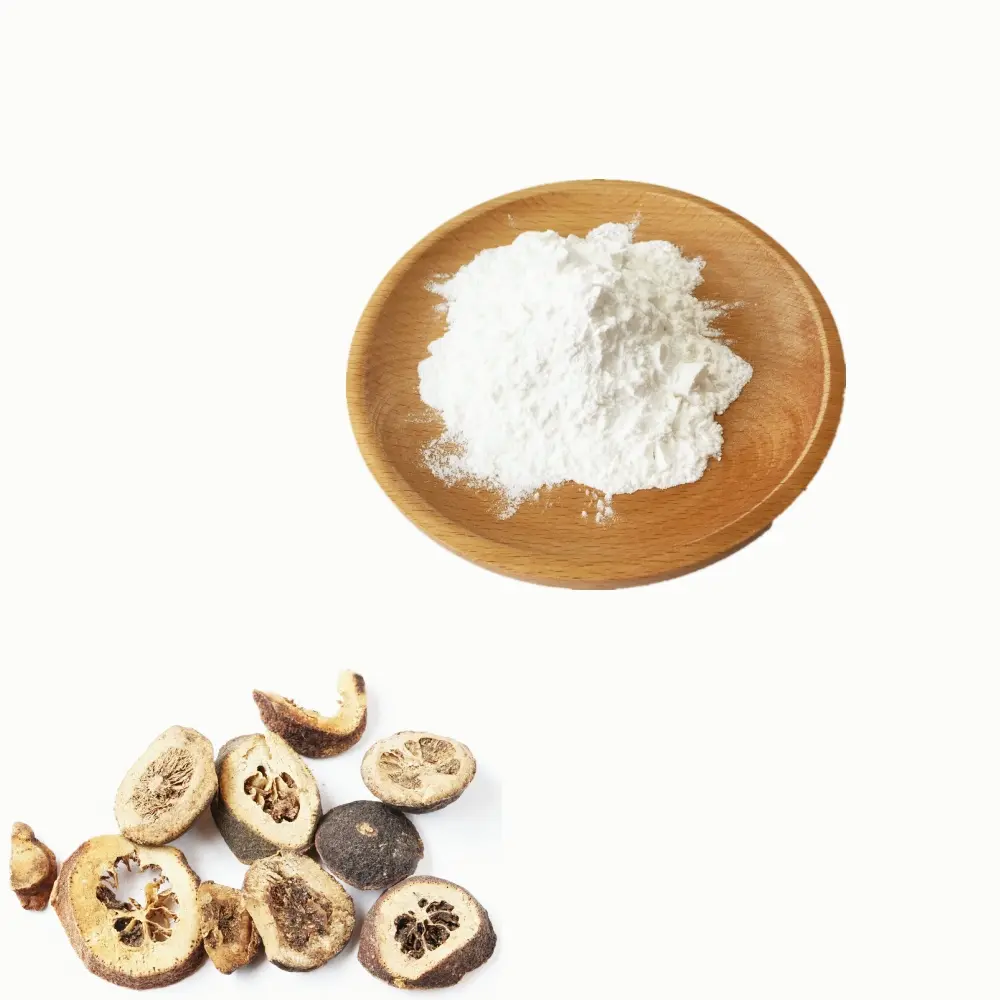
| Appearance | Light yellow to off-white powder |
| Odor & Taste | Characteristic |
| Physical-chemical Index | |
| Neohesperidin | 98% Min |
| Loss on drying | 5% Max |
| Ash | 5% Max |
| Particle Size | 98% pass 80 mesh |
| Heavy metals | 10 ppm Max |
| Lead | 2 ppm Max |
| Arsenic | 2 ppm Max |
| Mercury | 0.1 ppm Max |
| Cadmium | 1 ppm Max |
| Hygienic Index | |
| Total plate count | 1,000 cfu/g Max |
| Mold & Yeast | 100 cfu/g Max |
| Enterobacteriae | 10 cfu/g Max |
| E. Coli | Absent in 10 g |
| Salmonella | Absent in 25 g |
| Statements: Non-Irradiated, Non-GMO | |
| Shelf Life: 24 months stored in original packaging away from the light and under the optimal temperature 10–25 °C. | |
| Packaging: 1 kg / aluminium foil bag or 25 kg / fiber drum. | |
Neohesperidin, a citrus-derived flavanone glycoside, exerts potent free radical scavenging and anti-inflammatory effects by inhibiting inflammatory factors and modulating stress-related pathways. It protects cardiovascular health by enhancing capillary toughness, improving microcirculation and maintaining normal vascular permeability.
Additionally, it regulates intestinal flora, supports liver function by reducing fat accumulation and hepatocyte damage and serves as a key precursor for NHDC — a high-intensity low-calorie sweetener 1,500–2,000 times sweeter than sucrose.
Its antioxidant and anti-aging properties also make it valuable for skin care, while it aids in balancing blood lipids and alleviating intestinal inflammation.