Wholesale High Purity 98% Chrysin/5, 7-Dihydroxyflavone /Crysin Powder CAS 480-40-0 for Health Product Factory, Exporter

Chrysin is soluble in acetone at room temperature and insoluble in water. Chrysin has various biological activities such as antioxidant, anti-inflammatory, neuroprotective, etc. It has potential effects in anti-cancer, anti anxiety, and relieving brain damage

Product Description

Product Specification

Chrysin Technical Data Sheet
Specification and standard
Appearance Light yellow Powder
Odour Characteristic
Taste Characteristic
Identification TLC & NMR
Purity 99.25% (HPLC)
Loss on dry 0.34%
Total ash 0.15%
Particle size 95% pass 40 mesh
Heavy Metal ≤10ppm
Arsenic ≤2ppm
Mercury ≤0.1ppm
Cadmium ≤1ppm
Lead ≤2ppm
Microbiological Specifications
Total Plate Count ≤10000 cfu/g
Yeast & Mold ≤1000 cfu/g
Salmonella Negative
E-Coli Negative
Storage & Shelf Life
Storage Store in sealed containers at cool & dry place. Protect from light, moisture and pest infestation.
Shelf life 24 months under the previously mentioned conditions and in its original packaging.

Introduction to Chrysin

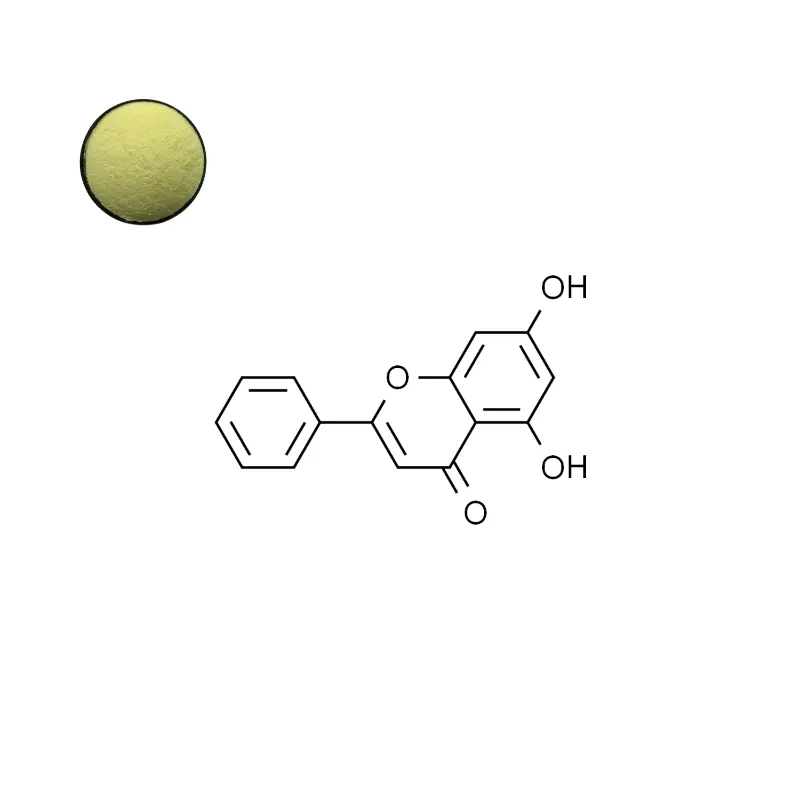
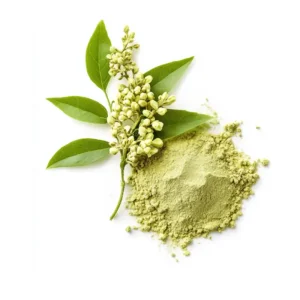
Chrysin is a naturally occurring flavonoid compound with the chemical name 5,7-dihydroxyflavone and the molecular formula C₁₅H₁₀O₄. It is primarily sourced from plants such as propolis, passionflower, and Lagerstroemia speciosa, and is one of the key active components in propolis. It appears as a light yellow crystalline powder, slightly soluble in water but readily soluble in organic solvents. Although widely distributed in nature, its content is generally low. Modern production mainly relies on plant extraction or chemical synthesis. Due to its unique flavonoid structure, chrysin exhibits multiple biological activities and has become a focal point in natural product research and functional ingredient development in recent years, showing significant potential in pharmaceuticals and health products.

Chrysin Powder Structure and Appearance

Efficacy of Chrysin

Chrysin demonstrates a broad range of biological activities:

Key Biological Benefits:
  1. Antioxidant effects: Effectively scavenging free radicals and reducing oxidative stress damage.
  2. Anti-inflammatory properties: Alleviating chronic inflammation by inhibiting pathways such as NF-κB.
  3. Potential antitumor effects: Laboratory studies indicating it can induce apoptosis and inhibit cancer cell proliferation.
  4. Neuroprotective functions: Potentially improving neurodegenerative diseases like Alzheimer's.
  5. Hormone metabolism regulation: Influencing estrogen levels by inhibiting aromatase.
  6. Liver protection: Mitigating chemical-induced liver damage.

*Note: Its oral bioavailability is relatively low, often requiring formulation optimization to enhance effectiveness.

Efficacy and Benefits of Chrysin

Application Fields of Chrysin

Chrysin is primarily applied in various commercial and scientific fields:

Primary Industries:
  • Health products: Used as a raw material for antioxidant and anti-aging supplements (capsules/tablets).
  • Pharmaceutical R&D: Serves as a lead compound for antitumor, neuroprotective, or anti-inflammatory drugs.
  • Functional foods: Added to specific health beverages or targeted food products.
  • Cosmetics: Formulated in anti-aging skincare products for its strong antioxidant activity.
  • Animal health: Used as a feed additive to support and improve livestock health.

Despite its wide applications, its utility is limited by bioavailability. Current research focuses on developing novel delivery systems, such as nano-formulations, to enhance its efficacy.
Applications of Chrysin in Health and Cosmetics

Frequently Asked Questions (FAQ)

Q1: What is the purity level and appearance of your Chrysin?
Our Chrysin is a light yellow powder with a high purity level of 99.25% verified by HPLC analysis.
Q2: What are the primary natural sources of Chrysin?
Chrysin is naturally sourced from plant materials such as propolis, passionflower (Passiflora), and Lagerstroemia speciosa. It is one of the primary active components found in propolis.
Q3: What are the recommended storage conditions and shelf life?
Chrysin should be stored in sealed containers in a cool and dry place, protected from direct light, moisture, and pest infestation. Under these conditions, the product maintains a shelf life of 24 months.
Q4: How does Chrysin exert its antioxidant and anti-inflammatory properties?
Chrysin effectively scavenges harmful free radicals to reduce oxidative stress, and it helps alleviate chronic inflammation by inhibiting specific cellular pathways like NF-κB.
Q5: What solutions are being researched to improve Chrysin's low oral bioavailability?
Because natural Chrysin has low oral absorption rates, current research and formulation developments focus on novel delivery systems, such as nano-formulations, to enhance its stability and bioavailability.
Q6: In what industries is Chrysin powder used?
Chrysin is widely used in the dietary supplement industry (antioxidant and anti-aging tablets/capsules), pharmaceutical R&D, functional food and beverages, anti-aging cosmetics, and animal feed health additives.

Related Products