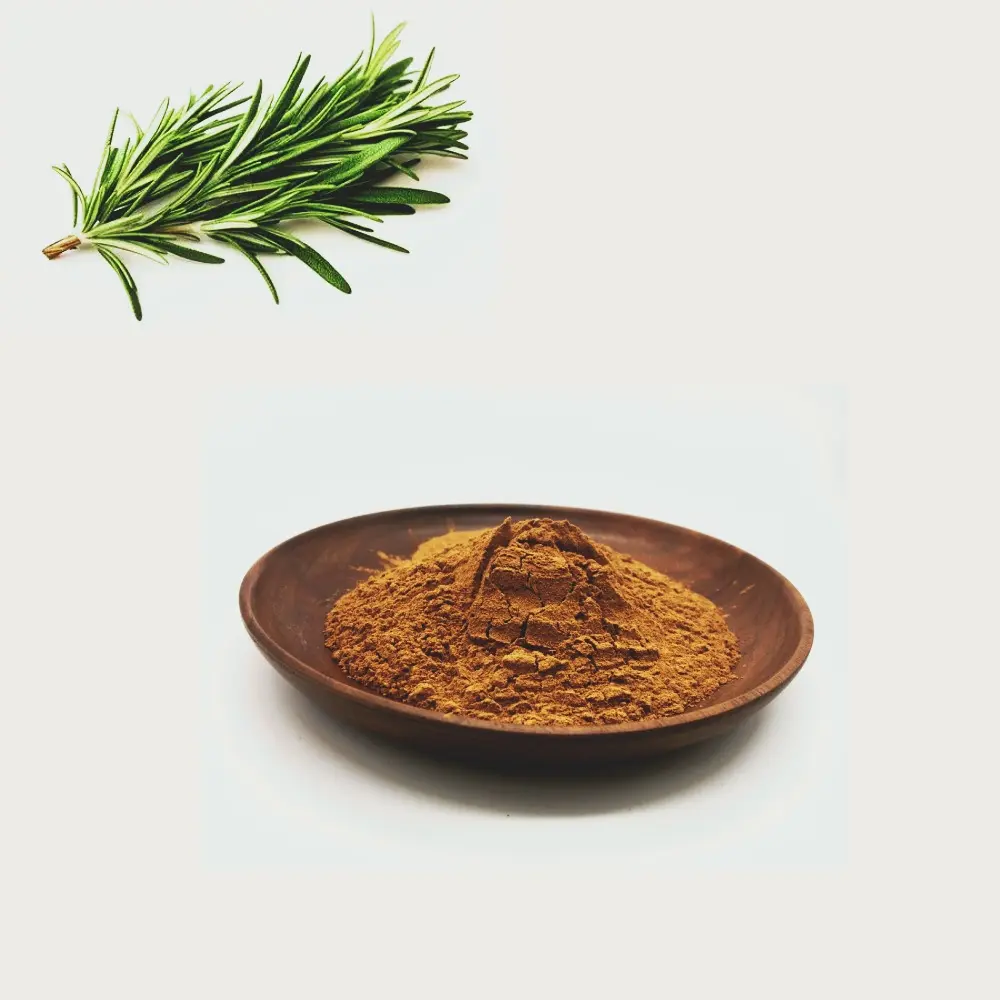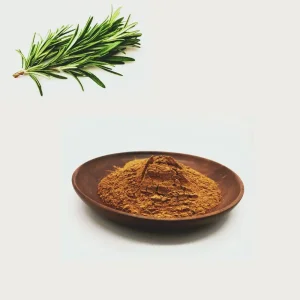
Wholesale Pure Natural Rosemary Extract CAS 3650-09-7 1%-98% Carnosic Acid Powder as Antioxidants Food Additive Supplier, Suppliers

Carnosic Acid(Rosemary Extract) molecules contain multiple hydroxyl groups and have oil soluble antioxidant properties, which are used to delay lipid oxidation; Research has shown that it has the potential to regulate lipid metabolism and delay aging.

Product Description

Description of Rosemary Extract Carnosic Acid

The main components of rosemary extract are Ursolic acid, Rosmarinic Acid and Carnosic Acid. Several main components in rosemary extract have strong antioxidant activity. It has obvious effects in preventing oil oxidation and maintaining meat flavor.
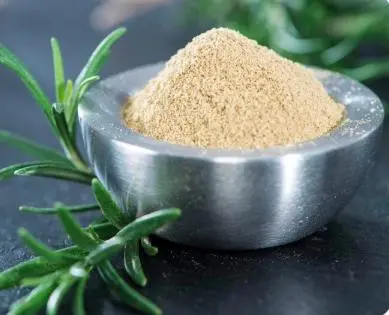
Main Specs:
  • Water soluble components: Rosmarinic Acid 5%, 10%, 50%, 98% (HPLC)
  • Oil soluble components: Carnosic Acid 5%, 10%, 20%, 98% (HPLC)
  • Ursolic Acid 25%, 50%, 98% (HPLC)
  • Rosemary oil
Rosemary Extract2

Research of Rosemary Antioxidant

The United States and Japan were the first countries to study rosemary antioxidants. Japan uses rosemary 95% acetic acid extract to prevent essence flavors from spoilage additives, and add natural carotenoids and other natural food colorants to prevent oxidation and fading.
Rosemary Extract5

After more than a decade of research on rosemary, China Academy of Sciences has not only completed the experiments of introduction and cultivation, but also achieved encouraging results in the extraction, isolation and structure identification of antioxidants, antioxidant efficiency experiments, production process and supercritical CO2 extraction technology, and the essence and aroma components of rosemary essential oil.

Salvianol, as an antioxidant and antimicrobial additive, has been widely used in food and pharmaceutical industry. Through long-term and short-term animal model studies, rosemary extract and its components have a potential inhibitory effect on the biological growth of inducing tumor. Rosmarinic acid has obvious antipyretic, analgesic, anti-inflammatory, antioxidant, antithrombotic and fibrinolytic activities. This product is also expected to be developed into a new antithrombotic drug. It is expected to solve the oxidation problem of chilled pork.
Rosemary Extract4

Specification of Rosemary Extract Carnosic Acid

Rosemary Extract Technical Data Sheet
Sense Index
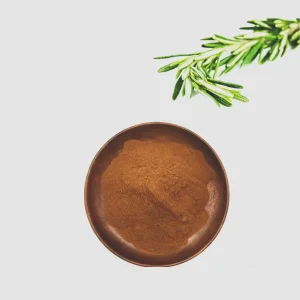
Appearance Light yellow to Brown powder
Odor & Taste Characteristic
Physical-chemical Index
Carnosic Acid (HPLC) 5%-98%
Particle Size 98% pass 80 mesh
Loss on drying 5% Max
Ash 5% Max
Heavy metals 10ppm Max
Lead 2ppm Max
Arsenic 2ppm Max
Mercury 0.1ppm Max
Cadmium 1ppm Max
Hygienic Index
Total plate count 1,000cfu/g Max
Mold & yeast 100cfu/g Max
Enterobacteriae 10cfu/g Max
E.Coli Absent in 10g
Salmonella Absent in 25g
Additional Information
Statements Non-Irradiated, Non-GMO
Packaging 1kg/aluminium foil bag, 25kg/drum (37*37*50cm).
Shelf Life 24 months stored in original packaging away from the light, and under the optimal temperature 10~25℃.

Function of Rosemary Extract Carnosic Acid

Oxidation Mechanism of Chilled Pork
The oxidation of lipids, especially unsaturated fatty acids, is the main cause of meat deterioration. When unsaturated fatty acids are reacted by oxygen in the air, the oxidation products are further decomposed into lower fatty acids, aldehydes and ketones. This oxidative degradation changes the quality of products, such as color, aroma, tissue structure and even nutritional components. This change of fatty acids is mainly completed by the oxidation of free radicals, which is divided into three stages.
Antioxidation of Chilled Pork
In meat, there is a balance between oxidation and antioxidation. The main influencing factors are: substrates of oxidation (fatty acids, oxygen); Oxidation enhancers (excessive metal elements, enzymes, iron containing proteins); antioxidant; Therefore, the prevention of oxidative deterioration of meat can be achieved by changing the oxidation substrate, reducing the oxidation strengthening effect and using antioxidants. In the antioxidant process of chilled pork, the first two need to change the meat composition or environment. Therefore, the antioxidant of chilled pork is often realized by using antioxidants.
Natural vs Synthetic Antioxidants
Food antioxidants include synthetic antioxidants (BHT, BHA, TBHQ, PG) and natural antioxidants. However, in the 1970s, it was found that excessive BHT and BHA would increase the liver of animals and have the possibility of cancer. Therefore, people pay more and more attention to natural antioxidants. Common natural antioxidants include VC, VE, rosemary and tea polyphenols. They not only have strong antioxidant capacity, but also pay the most attention to their safety. Therefore, natural antioxidants have been widely used in food in recent years. Applying rosemary antioxidants to cool pork is just around the corner.
Delay Aging
From the Drosophila survival test, it can be seen that each dose group of rosemary extract can prolong the life of Drosophila, and there is a dose effect relationship in a certain concentration range with the increase of rosemary extract concentration. The half death time, average life span and maximum life span of Drosophila melanogaster in 5mg / ml dose group were lower than those in the other two dose groups, and there was no significant difference in average life span compared with the control group. This may be related to the strong smell of rosemary extract, which affects the intake of fruit flies; It may also be that higher doses of rosemary extract will produce certain toxic effects.
Studies at home and abroad have shown that Rosemary extract is a highly effective natural antioxidant. Its antioxidant components mainly include sage phenol, rat tail oxalic acid, rosemary phenol and rosmarinic acid. Wang Hong and others researcher found that rosmarinic acid can improve the activity of antioxidant enzymes, remove free radicals, reduce the production of lipid peroxide and delay aging. The results showed that 30 days after feeding rosemary extract, the dose groups of 1mg / ml and 3mg / ml could significantly improve the antioxidant enzyme activity of Drosophila, inhibit the production of lipid peroxide MDA and effectively delay aging. It is speculated that the anti-aging mechanism of rosemary extract may be because the antioxidant components in rosemary extract can improve the activity of antioxidant enzymes, remove excess free radicals and maintain the balance of free radical metabolism, so as to reduce the lipid peroxidation of biofilm caused by free radicals and protect the normal metabolism of the body.

Application Area of Rosemary Extract Carnosic Acid

1. Natural Food Preservative
Widely recognized as an efficient and safe natural antioxidant used to replace or reduce the use of synthetic antioxidants such as BHT and BHA. It can effectively delay the oxidation and rancidity of oils, meats, snacks, and baked goods, prevent fading and odor generation, and significantly extend the shelf life of food. Especially widely used in oil rich foods and natural health foods.
2. Functional Foods and Health Products
Rely on their strong antioxidant and anti-inflammatory abilities, and rosemary extract is made into dietary supplements such as capsules and tablets. It helps protect cells from free radical damage, supports cognitive health and memory (traditional use), promotes liver detoxification function, and shows potential benefits for cardiovascular health, making it a popular functional ingredient.
3. Cosmetics and Personal Care Products
Widely used in this field. One is as a natural anti-corrosion system for products, replacing paraben preservatives and meeting the trend of "clean beauty". Second, as a core functional ingredient, its antioxidant properties are used in anti-aging products (such as face cream and essence) to fight wrinkles; Its antibacterial and anti-inflammatory properties are used for acne removal, oil control products (such as shampoo, facial cleanser), and soothing scalp discomfort.
4. Animal Feed Additives
In animal husbandry and aquaculture, rosemary extract serves as a natural feed antioxidant to prevent the oxidation and deterioration of fats and vitamins in the feed. At the same time, it can promote animal growth, enhance immunity, improve meat quality (reduce post slaughter oxidation to maintain freshness), and serve as a potential alternative to antibiotics, reducing the use of chemical additives.
5. Medicine and Agriculture
In the field of medicine, its active ingredients are being studied and used to develop drugs with the potential of anti-cancer, anti diabetes and neuroprotection (such as Alzheimer's disease). In the field of agriculture, it can be used as a raw material for biopesticides or plant growth regulators to prevent and control certain crop diseases and promote healthy crop growth, which is in line with the development direction of green agriculture.

Frequently Asked Questions (FAQ)

What are the primary active antioxidant compounds in Rosemary Extract?
The main active components responsible for the strong antioxidant activity of rosemary extract are Ursolic Acid, Rosmarinic Acid, and Carnosic Acid.
How does Rosemary Extract compare to synthetic food preservatives like BHT and BHA?
Rosemary extract is a highly effective natural antioxidant. Unlike synthetic alternatives like BHT and BHA, which have safety concerns regarding long-term health risks at high doses, rosemary extract provides a safer, clean-label solution with excellent preservation efficacy.
How does Carnosic Acid help prevent deterioration in chilled meat?
Chilled pork deteriorates primarily due to the oxidation of unsaturated fatty acids by oxygen, generating free radicals, lower fatty acids, aldehydes, and ketones. Rosemary extract helps neutralize these free radicals, preventing discoloration, odor formation, and nutrient loss.
What are the main cosmetic benefits of using Rosemary Extract?
In cosmetics, it is used as a natural alternative to synthetic preservatives like parabens. Functionally, its antioxidant power helps protect skin from aging and wrinkles, while its anti-inflammatory and antibacterial properties make it suitable for oil control, acne management, and scalp soothing.
What is the standard shelf life and optimal storage condition for Rosemary Extract Carnosic Acid?
The extract has a shelf life of 24 months. It should be stored in its original packaging, kept away from direct light, and maintained under an optimal temperature range of 10°C to 25°C.

Related Products