 Andy Biotech
1 / 1
| Tetrahydrocurcumin Technical Data Sheet | |
| Sense Index | |
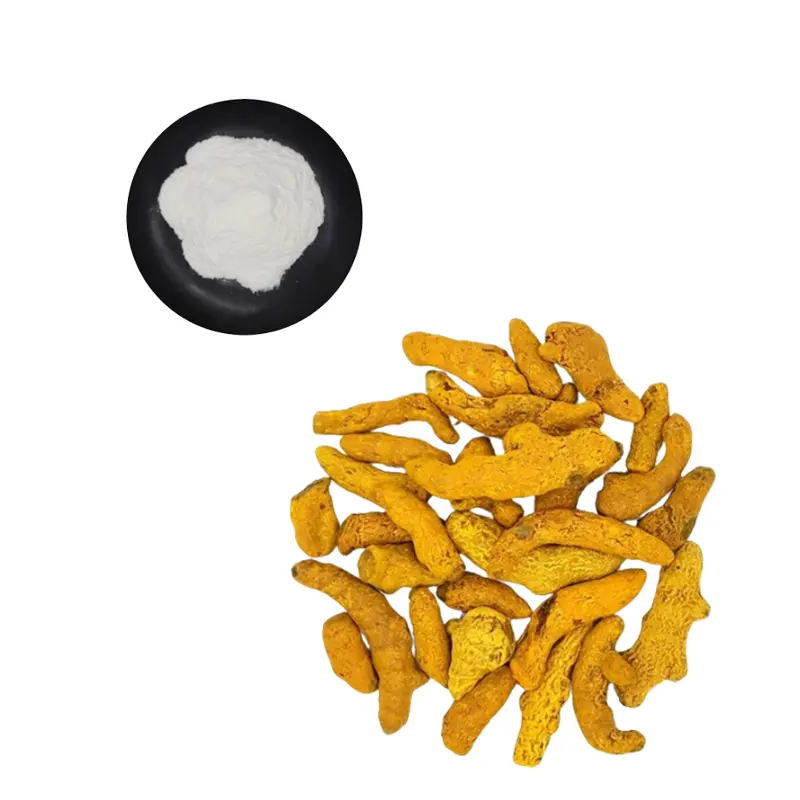
| Appearance | Off-white powder |
| Odor & Taste | Characteristic |
| Physical-chemical Index | |
| Assay (HPLC) | 95% Min |
| CAS No. | 36062-04-1 |
| Formula | C21H26O6 |
| Molecular Weight | 372.2 |
| Particle Size | 98% pass 80 mesh |
| Loss on drying | 5% Max |
| Ash | 5% Max |
| Heavy metals | 10ppm Max |
| Lead | 2ppm Max |
| Arsenic | 2ppm Max |
| Mercury | 0.1ppm Max |
| Cadmium | 1ppm Max |
| Hygienic Index | |
| Total plate count | 1,000cfu/g Max |
| Mold & yeast | 100cfu/g Max |
| Enterobacteriae | 10cfu/g Max |
| E.Coli | Absent in 10g |
| Salmonella | Absent in 25g |
| Statements & Packaging | |
| Statements | Non-Irradiated, Non-GMO |
| Packaging | 1kg/aluminium foil bag, 25kg/drum (37*37*50cm) |
| Shelf Life | 24 months stored in original packaging away from the light, and under the optimal temperature 10~25℃. |
Tetrahydrocurcumin (THC) is a major metabolic derivative of natural curcumin, produced via hydrogenation reduction of curcumin, with the molecular formula C21H24O6. Compared to curcumin, its chemical structure lacks conjugated double bonds, appearing as a white to pale yellow crystalline powder with significantly improved stability and lipophilicity, leading to better human absorption. It retains curcumin's core functional groups but exhibits stronger antioxidant activity and is almost non-pigmenting (colorless), representing an enhanced form of curcumin. Modern production primarily uses biocatalytic or chemical hydrogenation processes, and it is widely utilized in premium health products, pharmaceuticals, and cosmetics.
The core efficacy of tetrahydrocurcumin lies in its exceptional antioxidant and anti-inflammatory properties. Its reduced structure more effectively scavenges free radicals, inhibits lipid and protein oxidation, and protects cells from damage. It alleviates chronic inflammation by modulating pathways such as NF-κB and COX-2. Research indicates significant skin-brightening effects through tyrosinase inhibition and reduced melanin production. It also shows potential for liver protection, improving insulin resistance, anti-atherosclerosis, and neuroprotection. Compared to curcumin, it offers higher bioavailability, longer-lasting and gentler effects, with minimal gastrointestinal irritation.
Tetrahydrocurcumin is primarily used in high-end skincare as a core ingredient for antioxidant, anti-aging, brightening, and soothing sensitive skin. In the health product sector, it is used to develop high-efficacy antioxidants, liver protection, and joint health products. In pharmaceutical R&D, it serves as a candidate molecule for anti-inflammatory, neuroprotective, or metabolic disease drugs. The food industry may employ it as a natural antioxidant and functional pigment (for light-colored systems). Additionally, it finds applications in oral care products, medical dressings, and animal health. Its colorless nature expands its use in transparent or light-colored formulations, making it a representative high-value-added natural derivative.